Black History Month: Reclaiming Narratives
Marking a significant shift towards recognising and correcting the narratives of Black history and culture, this year’s theme for Black History Month was Reclaiming Narratives and it was a great opportunity for the History Department at Davenies to engage, inspire and challenge pupils to celebrate diversity and question the past.
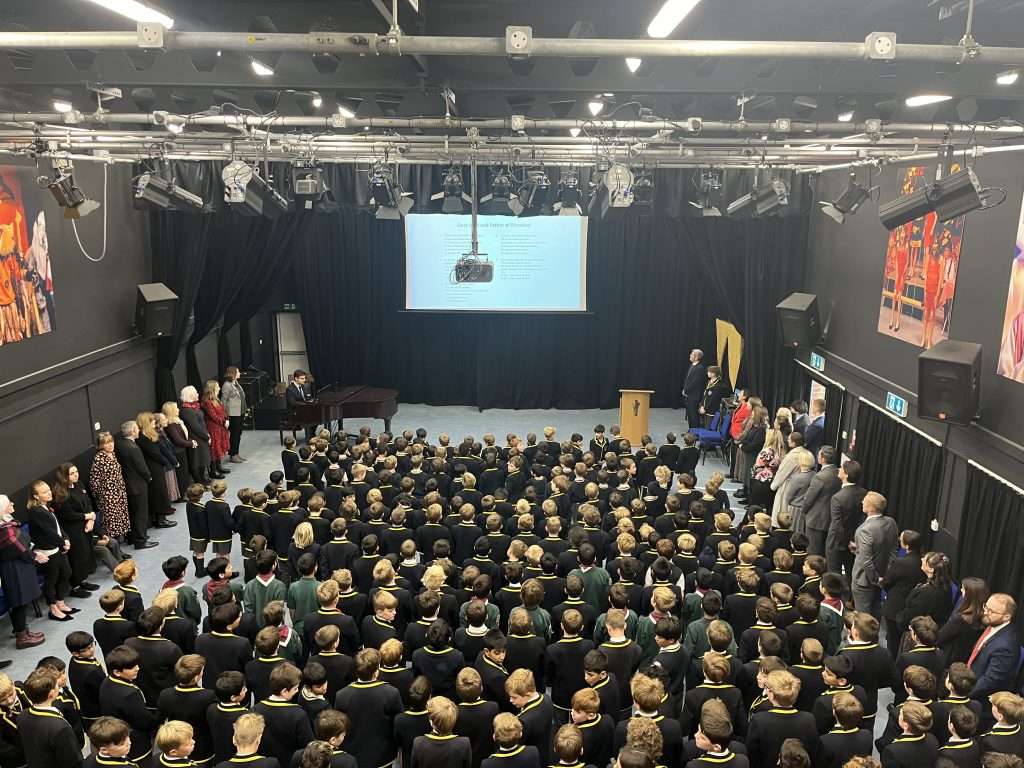
At Davenies, we are strongly committed to the personal development of the boys. Themes such as Black History Month in October (UK) are extremely important for their social development by ensuring the boys know about its significance to help make sense of the world and, unfortunately, the prejudice, bias, stereotyping and discrimination that can take place within it. This links to our school values in terms of what we value in being a community of tolerance and inclusiveness with each striving for the good of all. It provides the opportunity for everyone to share, celebrate and understand the impact of Black heritage and culture which was celebrated in our Whole School Assembly and theme of the week at the start of October “We are all equal.”
In turn, this helps the boys to enhance their own awareness of any subconscious bias making critical thinking possible – an extremely important transferable skill to their academic learning, as well as personal growth.
The theme for this year, “Reclaiming Narratives,” marks a significant shift towards recognising and correcting the narratives of Black history and culture. By emphasising “Reclaiming Narratives,” the theme shines a brighter light on stories throughout history. This theme underscores a commitment to correcting historical inaccuracies and showcasing the untold success stories and the full complexity of Black heritage while challenging the narratives that have often overlooked the contributions and achievements of Black individuals. To support and celebrate this, a number of learning opportunities involving History and PSHE lessons, elements of the trip to Cardiff and resources on Tooled Up Education were used to engage, inspire and challenge the boys to celebrate diversity and question the past.
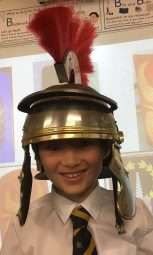
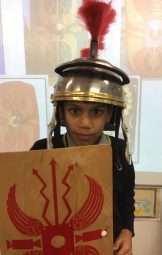
Within History lessons, boys were set the task of enquiry-based learning projects that linked to the schemes of work of which they have been working through since the start of term. In the Junior School, Year 3 explored the presence of Africans on Ancient Greek pottery using visual sources from The Met Museum in New York within their unit on Ancient Greece. This was reinforced further by the work of boys in Year 4 who have been learning about the Roman Empire. Using maps, websites and short video clips the boys learned about a group of soldiers who came from Africa and were stationed on Hadrian’s Wall, thinking about the journey they must have made and the contrast between their life in Africa compared to Cumbria. They also learned about Emperor Septimius Severus who at one point led the Roman Empire from York as part of his rule. Finally Year 4 studied the artefacts found buried in York with someone known as the ‘Ivory Bangle Lady’. They were fascinated to learn that people’s bones and teeth can tell archaeologists so much about where people are from, their age and gender to the point where we could see a 3-D recreation of what the Ivory Bangle Lady may have looked like. The boys worked together to suggest what they could learn from the evidence found and posed further questions they would like answered.
Boys in the Middle School grasped the opportunity for comparative analysis of different historical periods within British History, as well as world history. Year 5 looked at artefacts discovered at the Sutton Hoo and the Staffordshire Hoard, and learnt that from these, historians now understand that Anglo-Saxons (once considered to be the ‘Dark Ages’) had vast trade routes to Portugal, India, Sri Lanka and northern Africa. This shows us that the Anglo-Saxons were actually well connected globally and traded materials as far away as India and Sri Lanka. Others in the year group have been busy researching famous black significant figures of history to celebrate Black History Month. Celebrating individuals from both the past and present and recognising their amazing achievements in the form of PowerPoints and posters.
Year 6, who have been studying the Norman Conquest, compared the migration of the Normans under William Duke of Normandy to the history of the Empire Windrush (1948) as part of a project about significant historical events. Within this, they questioned its importance by assessing the consequences of migration over the 882 years between the two events. Additionally, Year 6 will be looking at Norman adventures in Africa in subsequent weeks.
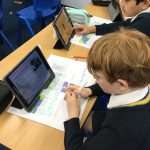
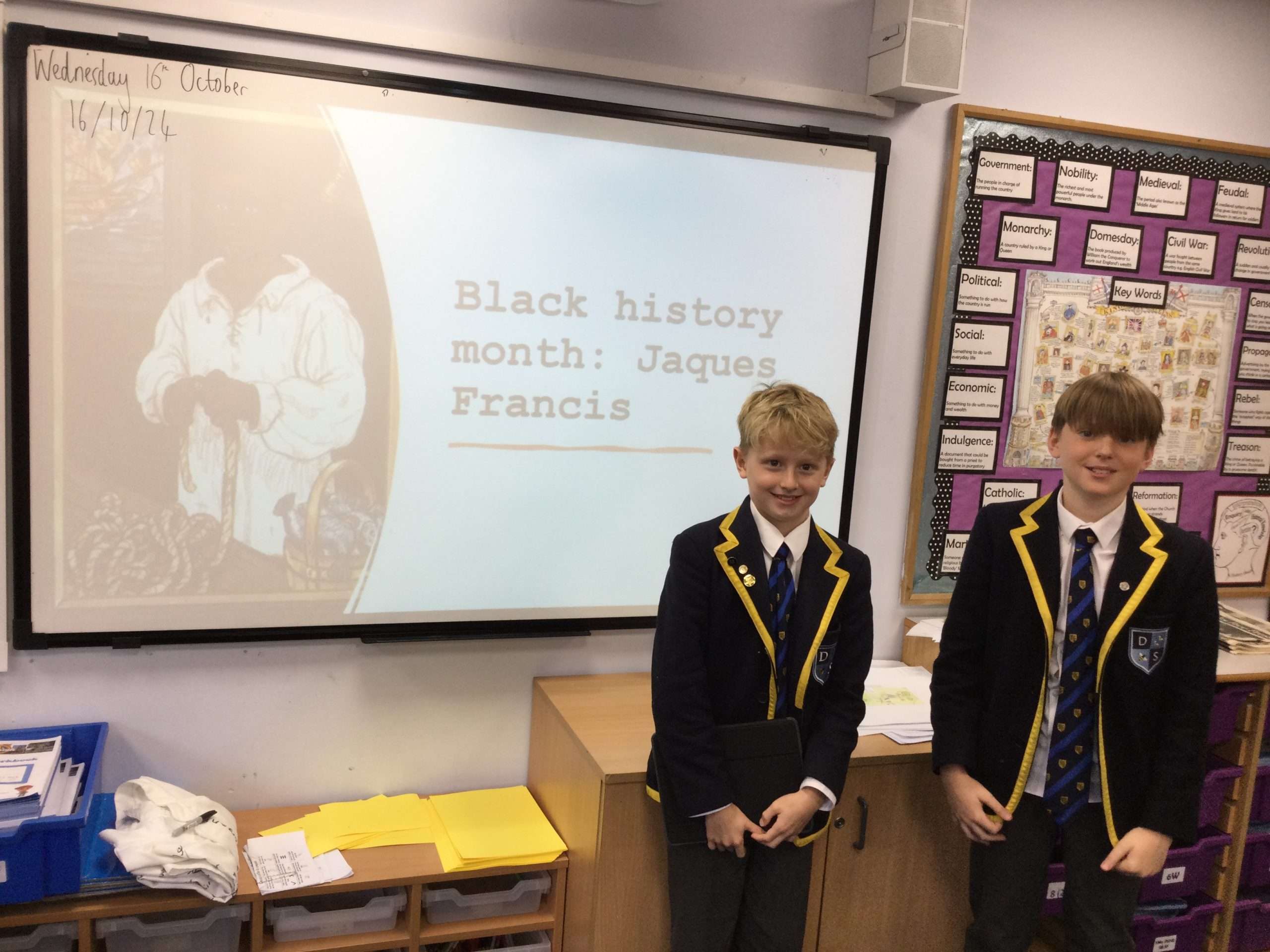
The Common Entrance syllabus studied by Years 7 and 8 focusses on the Tudor Dynasty and eyes were opened when studying visual sources of Henry VII and Henry VIII’s courts to see John Blanke, a royal trumpeter in the courts of Henry VII and Henry VIII. He remains the only Black Tudor for whom we have an identifiable image. While serving two kings, he bore witness to some of the great moments in England’s history and contributed to some of the greatest spectacles of the Tudor age. This depth study captured the boys’ imaginations which opened new lines of research using Dr Miranda Kaufmann’s book, Black Tudors. Black Tudors has become a phenomenon in the History teaching community since its publication in 2017. Within it, an infographic of the lives of six Black Tudors in Britain gave the boys an insight into a neglected history. At its heart, the book is about human stories that are so key to pupils’ interest and engagement. From this, the boys researched and presented their own projects on one of the Tudors mentioned, two of which followed the theme of saluting our sisters to include Mary Fillis, one of the first black people to be christened in Tudor England as well as Cattalena of Almondsbury who lived in rural England which was very uncommon for migrants who arrived in Britain. Other projects included Reasonable Blackman, Diego the Circumnavigator, John Blanke and Jaques Francis.
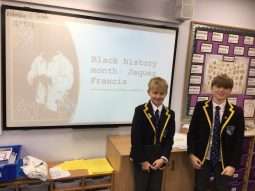
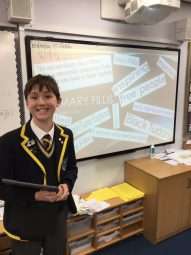
The purpose of Black History Month was about giving boys a snapshot of the wider range of History that exists in Britain. By exploring the experiences of individuals, it has enabled the boys to link them to a wider historical narrative. As such, honouring the contributions made to society by people of Black heritage and their communities; in addition to emphasising the need to come together around a shared common goal to achieve a better world for everyone.
The History Department will be building on recent work for Remembrance when boys will be undertaking a number of different projects to celebrate the soldiers of the Commonwealth, as well as looking at the stories of Britain’s black community in the First World War and the role of women in WW1.
Mr Fryer, Head of History